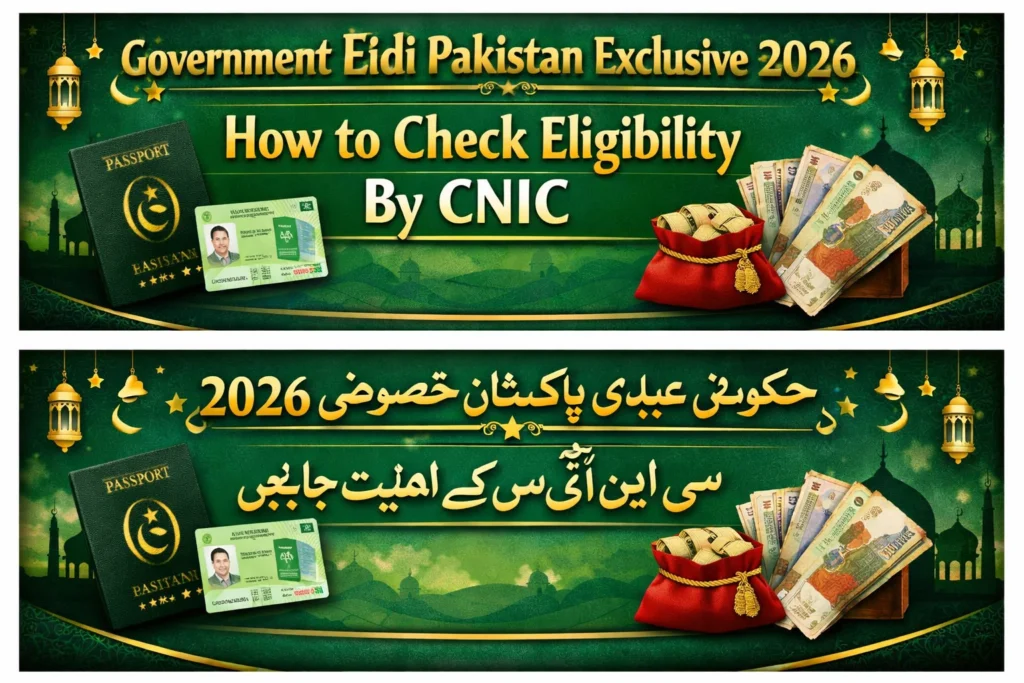
Eidi From Government of Pakistan 2026 – Who Can Receive It and How to Check Eligibility
Eidi from government of Pakistan is a term commonly used by low-income families to describe the financial aid provided through various government welfare programs to celebrate Eid effectively. These assistance programs, launched by both federal and provincial governments, aim to alleviate financial stress on vulnerable households by helping them cover increased expenses such as new clothes for children, special meals, and other festive costs. With rising inflation in consumer prices, timely financial support before Eid becomes essential for many families to observe the celebration comfortably.
These financial relief packages are usually distributed through existing welfare frameworks like the Benazir Income Support Programme (BISP), a primary system designed for regular conditional and unconditional cash transfers. Additionally, several provinces often announce specific Ramzan relief packages to provide subsidized food items and cash disbursements. This comprehensive guide details what assistance is available under the label of “Eidi from government of Pakistan,” outlining eligibility criteria and the process for checking qualification for these schemes.
Understanding Government Eidi and Its Purpose
The primary objective of providing financial support around Eid-ul-Fitr and Eid-ul-Adha is to reduce the burden of inflation on poor households. These families often face significant pressure during festive seasons to provide for their loved ones. The government assistance schemes attempt to bridge this gap by offering cash transfers that coincide with the preparations for Eid.
In Pakistan, the term Eidi has evolved beyond a traditional gift to mean official state support for celebrations. For a low-income family, a payment of Rs. 10,000 to Rs. 13,000 can make a significant difference in purchasing essential food items, preparing sewaiyan, buying mehndi, and ensuring children receive new attire. The government’s goal is to minimize exclusion from festive participation for those struggling with poverty.
These programs are particularly targeted toward daily wage workers, widows, disabled individuals, and families registered under the National Socio-Economic Registry (NSER). Ensuring these vulnerable groups receive a much-needed financial boost helps maintain social cohesion and supports economic stability at the household level.
Key Government Programs Providing Financial Support
While there is no single program officially named “Eidi,” several existing schemes ensure beneficiaries receive financial assistance around the time of the festive season. The most prominent of these programs are detailed below. Interested individuals often check online portals like Schemess.com for updates on specific payment dates and amounts associated with these initiatives.
Benazir Income Support Programme (BISP) and Quarterly Disbursements
The BISP is the flagship unconditional cash transfer program in Pakistan, providing financial aid to millions of registered families. The program’s quarterly disbursement cycle, which typically provides payments ranging from Rs. 10,000 to Rs. 13,500, often overlaps with the months leading up to Eid. When this occurs, the BISP payment serves as the core “Eidi from government of Pakistan.”
The previous BISP payment of Rs. 13,500 per quarter was a significant source of pre-Eid assistance for many families. BISP also provides assistance to families under specific categories like Benazir Kafalat and Benazir Taleemi Wazaif (education stipends), ensuring a continuous flow of support for vulnerable households.
Ramzan Relief Packages and Utility Store Subsidies
Every year during the month of Ramadan, the federal government and various provincial governments roll out special relief packages. These packages often include both a cash component and discounted essential food items. The goal is to ease the financial pressure on families during the month-long fast and ensure they have a dignified Eid celebration.
For instance, the Ramzan Relief Package 2026 often includes subsidies on staples like flour (atta), sugar, ghee, and pulses available through utility stores. These subsidized goods, combined with potential cash payments of up to Rs. 10,000, are specifically timed to help families manage expenses before Eid-ul-Fitr. The government uses these packages to control hyperinflation on essential goods during the festive season.
Provincial Initiatives and Targeted Support Schemes
In addition to federal initiatives, many provinces launch their own targeted support schemes. These provincial programs may differ in focus and distribution methods. For example, some provinces may prioritize specific geographical areas or demographics, while others may opt for digital payments through mobile wallets.
These initiatives are designed to reach specific segments of the population, such as daily wage workers who lose regular income sources during the holidays or special payments for widows and orphans registered with provincial authorities. These targeted schemes often provide quick, localized financial assistance just before Eid-ul-Fitr.
Eligibility Criteria and Beneficiary Verification
Eligibility for these programs depends on registration within the National Socio-Economic Registry (NSER) database and meeting specific criteria for poverty score and household characteristics.
Who Can Receive Government Eidi?
To be eligible for assistance, individuals typically must meet the following criteria:
- Poverty Score (PMT): The individual must fall below a specific poverty threshold set by BISP through the NSER survey.
- Household Status: The applicant must be part of a low-income family with no significant assets or sources of high income.
- Vulnerable Groups: Priority is often given to widows, elderly individuals, a person with disabilities, and families relying on daily wage earnings.
Who Usually Does Not Qualify for BISP and Ramzan Packages:
- Individuals with high-income jobs or significant assets.
- Government employees in senior positions (Grade 17 and above).
- Individuals registered as high-income taxpayers.
- Families that own large properties (land, vehicles) above specified limits.
How to Check Eligibility and Payment Status
The most common method for verifying eligibility for assistance involves the use of a citizen’s CNIC number. The 9999 online check for payment status and re-verification is widely used for BISP, while the 8171 code is used for specific BISP and other short-term assistance programs.
SMS Verification Method (8171/9999)
The government has streamlined the verification process using SMS services to make it accessible to citizens in rural and urban areas.
- Compose a Message: Open the SMS app on a mobile phone registered in the applicant’s name.
- Enter CNIC: In the message body, type the 13-digit Computerized National Identity Card (CNIC) number.
- Send to Code: Send the message to the shortcode
8171or9999(depending on the specific program or phase of verification). - Receive Reply: The system will reply with an eligibility status, including whether the individual is registered and eligible, or instructed to contact a BISP center for re-verification.
Online Portal Method
For those with internet access, online portals offer a quick and efficient way to verify eligibility and payment status. Citizens can enter their CNIC number on the official BISP portal or other relevant government websites to check their status in real time. This digital process helps reduce long waiting times at physical distribution centers and supports transparent information sharing.
Payment Disbursement Channels
Once eligibility is confirmed, beneficiaries can collect their Eidi from government of Pakistan through several secure and convenient methods.
Biometric Verification at ATMs and Retailers
The primary method for collecting cash assistance is through biometric verification at authorized partner banks’ ATMs and retail agents.
- CNIC Requirement: Beneficiaries must present their original CNIC to verify their identity at the payment point using biometric scanning (fingerprint matches).
- ATM Withdrawal: Many banks allow BISP beneficiaries to withdraw their funds directly from ATMs without needing a debit card by using biometric verification.
- Authorized Agents: Retailers and payment points in smaller towns and villages are authorized to disburse funds using biometric verification devices, ensuring accessibility in more remote areas.
Conclusion: The Impact of Government Eidi
The financial assistance provided by the government during Eid, commonly referred to as “Eidi from government of Pakistan,” plays a vital role in enabling vulnerable families to observe the holidays with dignity. By leveraging existing programs like BISP and introducing specific Ramzan relief packages, the government aims to mitigate the effects of inflation on low-income households.
The effectiveness of these programs, however, depends on accurate targeting through the NSER and timely disbursement of funds. For many families, this support represents a critical lifeline that allows them to purchase new clothes for children and prepare special meals, ensuring that the festive spirit is accessible to all segments of society, regardless of their financial circumstances.
Frequently Asked Questions (FAQs) About Government Eidi
Q1: What exactly is “Eidi from government of Pakistan” referring to?
A: The term “Eidi from government of Pakistan” is not an official program name. It is commonly used by citizens to describe financial assistance provided through government welfare schemes, such as BISP or Ramzan relief packages, that are disbursed around the festive season of Eid to help families cover celebration expenses.
Q2: How much financial assistance can I expect to receive?
A: The assistance amount varies depending on the specific program and current government policies. BISP quarterly installments typically range from Rs. 10,000 to Rs. 13,500. Ramzan relief packages may offer add-on amounts or subsidized goods, which vary each year.
Q3: Is the PM Youth Loan Scheme 2026 considered part of the Eidi program?
A: No, the PM Youth Loan Scheme is a separate initiative focused on providing financing for business startups and agriculture. While it is a form of government support, it is not direct financial aid for Eid expenses like BISP or Ramzan cash payments.
Q4: How can I check my eligibility using my CNIC?
A: The primary method is through SMS verification. Send your 13-digit CNIC number to the official shortcode (usually 8171) from your registered mobile number. You will receive a reply confirming your eligibility status. Some programs also offer an online portal (9999 online check) for verification.
Q5: What should I do if my eligibility verification fails or says I need re-verification?
A: If the SMS verification process indicates ineligibility or requires re-verification, you should visit the nearest BISP or government support center. They will guide you through the process of re-registering and updating your details in the National Socio-Economic Registry (NSER) database.
Q6: Where do I collect the payment once I am confirmed eligible?
A: Payments are typically collected through biometric verification at authorized BISP distribution centers, specific bank ATMs, or designated partner retailers. You must present your original CNIC to receive the funds.
Q7: Is the assistance only provided before Eid-ul-Fitr, or also before Eid-ul-Adha?
A: Government assistance programs are primarily structured around existing payment cycles (like BISP quarterly payments) and specific Ramzan relief packages. While some disbursements may coincide with Eid-ul-Adha, a specific “Eidi” program is more commonly associated with Eid-ul-Fitr preparations.